Is ChatGPT confidential? ChatGPT is a popular AI tool used within businesses across the UK. However, there are ongoing concerns regarding the use of ChatGPT and sensitive data.
Like most AI tools, ChatGPT potentially stores and uses data for training and system improvements, which may raise several UK General Data Protection Regulation (GDPR) risks.
To learn more about ChatGPT’s confidentiality for business use, continue reading.
What is ChatGPT?
ChatGPT (Generative Pre-trained Transformer) is a chatbot developed by OpenAI. It responds to users in a human-like manner, assisting in a variety of tasks. From answering general questions to translating text, it’s clear to see that ChatGPT has become incredibly popular for both personal and business use.
In fact, recent statistics show that ChatGPT:
- Has 800 million weekly users as of 2025
- Processes over 2 billion queries each day
What Confidentiality Means When Using ChatGPT
Confidentiality is the duty to keep sensitive information and data private. Regarding business, an organisation’s private data should only be available to those who are properly authorised – and ChatGPT likely isn’t one of them.
Confidentiality in business typically includes:
- Customer data
- Employee data & information
- Legal documents
- Contracts
- Trade secrets
- Pricing information
- Future marketing plans
Using AI tools such as ChatGPT to share confidential company data may put your business or employer at high risk of data breaches or non-compliance, unless policies are in place to follow.
Is ChatGPT Confidential?
No, ChatGPT is not confidential, especially for sensitive data.
Free versions of ChatGPT may potentially use information from conversations with users for model improvements unless you opt out or manually delete chats. So, while using ChatGPT can be beneficial, it’s best to avoid sharing confidential information to prevent issues, such as data breaches.
Why is ChatGPT Not Confidential?
By default, ChatGPT stores all the information you provide unless you manually delete conversations, making it non-confidential.
Stored data (including the data you’ve shared) has no end-to-end encryption, which allows OpenAI potential access. In turn, this means that the data you’ve shared with ChatGPT is no longer considered private or confidential.
ChatGPT Privacy Policy
We understand what you might be thinking – is ChatGPT really allowed to use your confidential data to improve its own services? Unfortunately, yes!
ChatGPT’s Privacy Policy states:
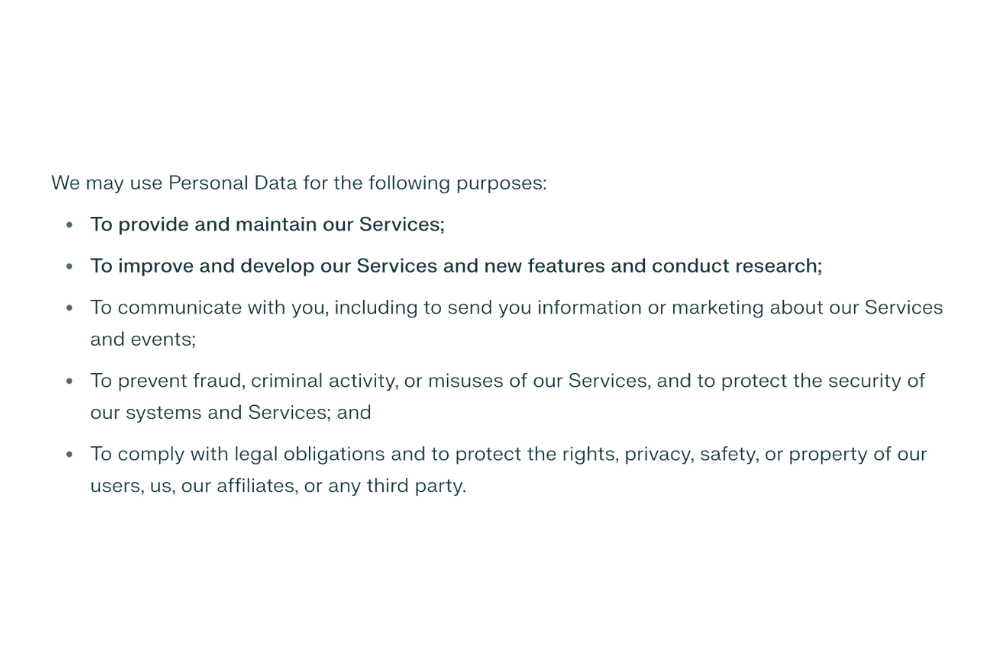
Despite this, there is somewhat of a positive side – ChatGPT can’t sell or share user data with any third parties without your consent, and does go to some effort to employ safety measures to comply with protection laws. However, even with these safety measures in place, sharing sensitive data remains a significant risk.
What Does ChatGPT Have to Say?
So, what does ChatGPT say about confidentiality? We thought we’d ask it ourselves:
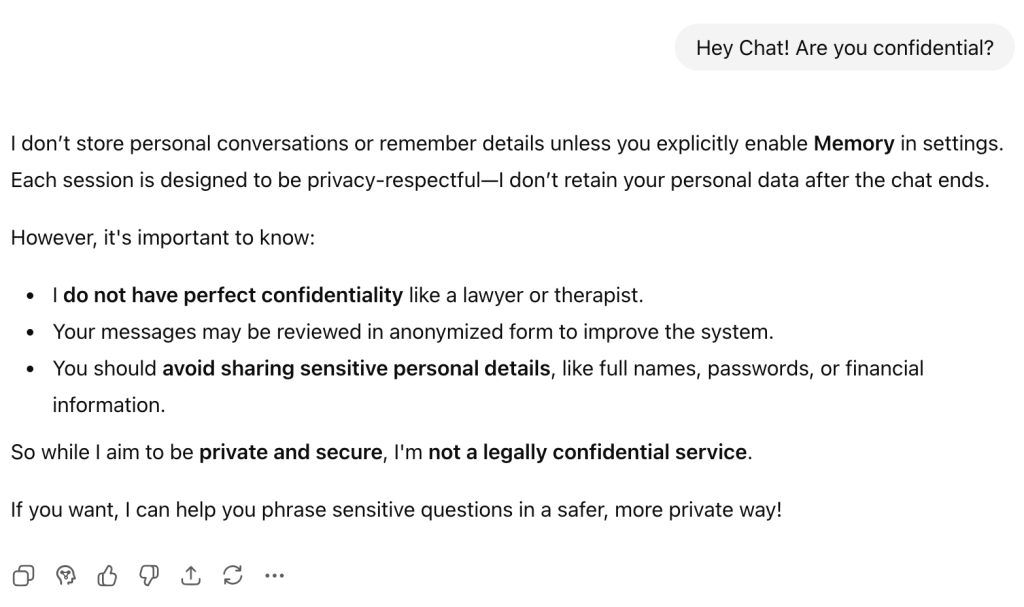
There we have it! As you can see, ChatGPT explicitly states that it does not have perfect confidentiality, and that messages may be used to improve the system. It then explains how you should avoid sharing sensitive personal details, and that while it aims to be private and secure, it’s not a legally confidential service.
ChatGPT Under UK Law
As we’re aware, public versions of ChatGPT are not confidential. Entering sensitive data can cause compliance risks, as all UK businesses have a duty to keep specific information confidential under regulations:
- UK General Data Protection Regulation (GDPR) – The UK’s data privacy law that sets out clear rules regarding how businesses in the UK collect, use, and store private information about other individuals.
- Data Protection Act 2018 – Explains the duties to keep personal and sensitive data accurate, protected, and used for the intended purpose.
- Professional Obligations – Several types of businesses, such as law firms or healthcare services, have additional duties of care to ensure client data remains confidential, meaning it must not be shared with AI tools under any circumstances.
The Risks of Sharing Sensitive Data on ChatGPT
It’s important to understand the potential risks that come with sharing sensitive data on ChatGPT.
Data Leaks
You may breach UK GDPR if you expose personal data. This includes important business data, such as private documents containing essential information, and also customer data, such as full names, addresses, and emails.
Breach of Contract
Several organisations are most vulnerable to contract breaches due to strict confidentiality rules, such as law firms and businesses within the finance sector.
Secret Business Plans
Sharing private trade secrets with ChatGPT not only puts your future plans at risk of being leaked but may also cause competitive harm if anyone accesses your information through data breaches.
Legal Fines
The Information Commissioner’s Office (ICO) has the power to issue large legal fines and penalties for both intentional and unintentional data breaches.
Reputational Damage
Both data breaches and leaks of confidential information can cause significant reputational damage to your business, which often results in long-term issues.
What to Avoid Sharing on ChatGPT
Businesses should generally avoid sharing information with ChatGPT that you wouldn’t choose to share publicly, such as:
- Personal data
- Employee information
- Legal documents
- HR-related information
- Financial details
- Trade secrets
It’s important to train staff members to understand how to use ChatGPT tools in line with your organisation’s data protection and AI policies.
How to Safely Use AI in Business
Don’t be put off using helpful AI tools such as ChatGPT. While learning about ChatGPT’s privacy policy can be unsettling, there are certainly ways to take advantage of AI tools for business.
1. Read Terms & Conditions
Before using an AI tool, make sure that you read both its privacy policy and any small print. This will help gain better insight into confidentiality and how they plan on storing and using your data.
2. Implement IT Policies
Create and implement an IT policy explaining exactly which AI tools are allowed to be used, and what type of data is safe to enter. Having a policy surrounding the use of AI in the workplace is essential to prevent employees from accidentally sharing sensitive data.
3. Train Employees
Once IT policies on AI use are fully enforced, ensure that employees understand the rules and where to access guidance on using tools such as ChatGPT.
4. Choose Enterprise Versions of AI
Instead of using free versions of AI tools, opt for business plans. This doesn’t necessarily have to be ChatGPT – there are other tools, such as Copilot for Microsoft 365, with plans available to offer more enhanced security for business purposes.
5. Avoid Sharing Confidential Data
The simplest and most effective way to safely leverage AI in business is the most obvious – avoid sharing confidential data.
Of course, once policies and set rules are in place for using AI tools in business, it’ll be easier to understand which data can be shared. However, the easiest way to avoid issues altogether is to avoid sharing information with ChatGPT that you know should remain private.
Make Smarter Technology Decisions for Your Business
Are you looking to make smarter technology decisions for your UK business? We can help! At Halcyon, we offer specialist IT consulting services for businesses across the country. Our dedicated team of professionals remain on hand to help you make smart choices when it comes to using technology, such as AI, as part of your daily operations.
Contact us today to learn more about how we can help your organisation.

James Hamilton is an IT industry expert and the founder of Halcyon, with extensive experience delivering managed IT, cyber security, and connectivity solutions.